



In ready-mixed mortar, the addition amount of cellulose ether is very low, but it can significantly improve the performance of wet mortar, and it is a main additive that affects the construction performance of mortar. Reasonable selection of cellulose ethers of different varieties, different viscosities, different particle sizes, different degrees of viscosity and added amounts will have a positive impact on the improvement of the performance of dry powder mortar. At present, many masonry and plastering mortars have poor water retention performance, and the water slurry will separate after a few minutes of standing. Water retention is an important performance of methyl cellulose ether, and it is also a performance that many domestic dry-mix mortar manufacturers, especially those in southern regions with high temperatures, pay attention to. Factors affecting the water retention effect of dry mix mortar include the amount of MC added, the viscosity of MC, the fineness of particles and the temperature of the use environment.
1. Concept
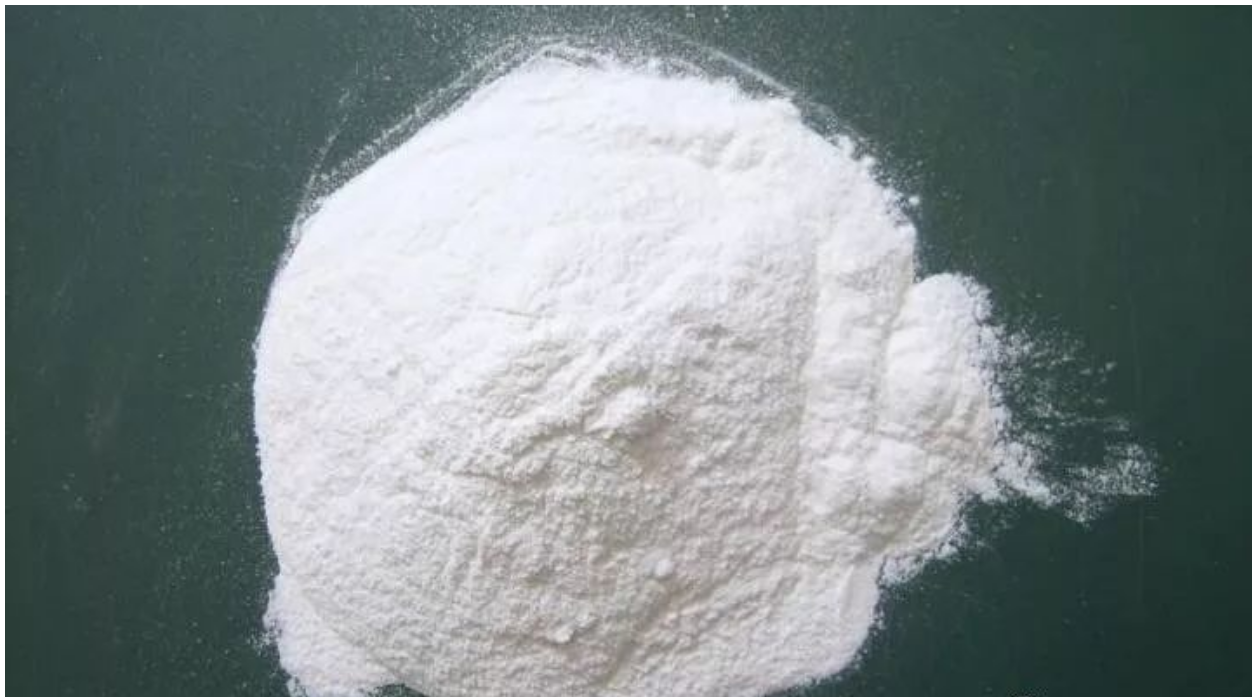
Cellulose ether is a synthetic polymer made from natural cellulose through chemical modification. Cellulose ether is a derivative of natural cellulose. The production of cellulose ether is different from synthetic polymers. Its most basic material is cellulose, a natural polymer compound. Due to the particularity of the natural cellulose structure, the cellulose itself has no ability to react with etherification agents. However, after the treatment of the swelling agent, the strong hydrogen bonds between the molecular chains and the chains are destroyed, and the active release of the hydroxyl group becomes a reactive alkali cellulose. Obtain cellulose ether.
The properties of cellulose ethers depend on the type, number and distribution of substituents. The classification of cellulose ethers is also based on the type of substituents, degree of etherification, solubility and related application properties. According to the type of substituents on the molecular chain, it can be divided into mono-ether and mixed ether. The MC we usually use is mono-ether, and the HPMC is mixed ether. Methyl cellulose ether MC is the product after the hydroxyl group on the glucose unit of natural cellulose is substituted by methoxy. It is a product obtained by substituting a part of the hydroxyl group on the unit with a methoxy group and another part with a hydroxypropyl group. The structural formula is [C6H7O2(OH)3-m-n(OCH3)m[OCH2CH(OH)CH3]n]x Hydroxyethyl methyl cellulose ether HEMC, these are the main varieties widely used and sold in the market.
In terms of solubility, it can be divided into ionic and non-ionic. Water-soluble non-ionic cellulose ethers are mainly composed of two series of alkyl ethers and hydroxyalkyl ethers. Ionic CMC is mainly used in synthetic detergents, textile printing and dyeing, food and oil exploration. Non-ionic MC, HPMC, HEMC, etc. are mainly used in construction materials, latex coatings, medicine, daily chemicals, etc. Used as thickener, water retaining agent, stabilizer, dispersant and film forming agent.
2. Water retention of cellulose ether
Water retention of cellulose ether: In the production of building materials, especially dry powder mortar, cellulose ether plays an irreplaceable role, especially in the production of special mortar (modified mortar), it is an indispensable and important component.
The important role of water-soluble cellulose ether in mortar mainly has three aspects, one is excellent water retention capacity, the other is the influence on the consistency and thixotropy of mortar, and the third is the interaction with cement. The water retention effect of cellulose ether depends on the water absorption of the base layer, the composition of the mortar, the thickness of the mortar layer, the water demand of the mortar, and the setting time of the setting material. The water retention of cellulose ether itself comes from the solubility and dehydration of cellulose ether itself. As we all know, although the cellulose molecular chain contains a large number of highly hydratable OH groups, it is not soluble in water, because the cellulose structure has a high degree of crystallinity.

The hydration ability of hydroxyl groups alone is not enough to cover the strong hydrogen bonds and van der Waals forces between molecules. Therefore, it only swells but does not dissolve in water. When a substituent is introduced into the molecular chain, not only the substituent destroys the hydrogen chain, but also the interchain hydrogen bond is destroyed due to the wedging of the substituent between adjacent chains. The larger the substituent, the greater the distance between molecules. The greater the distance. The greater the effect of destroying hydrogen bonds, the cellulose ether becomes water-soluble after the cellulose lattice expands and the solution enters, forming a high-viscosity solution. When the temperature rises, the hydration of the polymer weakens, and the water between the chains is driven out. When the dehydration effect is sufficient, the molecules begin to aggregate, forming a three-dimensional network structure gel and folded out.
Factors affecting the water retention of mortar include the viscosity of cellulose ether, the amount added, the fineness of particles and the use temperature.
The greater the viscosity of cellulose ether, the better the water retention performance. Viscosity is an important parameter of MC performance. At present, different MC manufacturers use different methods and instruments to measure the viscosity of MC. The main methods are Haake Rotovisko, Hoppler, Ubbelohde and Brookfield, etc. For the same product, the viscosity results measured by different methods are very different, and some even have doubled differences. Therefore, when comparing viscosity, it must be carried out between the same test methods, including temperature, rotor, etc.

Generally speaking, the higher the viscosity, the better the water retention effect. However, the higher the viscosity and the higher the molecular weight of MC, the corresponding decrease in its solubility will have a negative impact on the strength and construction performance of the mortar. The higher the viscosity, the more obvious the thickening effect on the mortar, but it is not directly proportional. The higher the viscosity, the more viscous the wet mortar will be, that is, during construction, it is manifested as sticking to the scraper and high adhesion to the substrate. But it is not helpful to increase the structural strength of the wet mortar itself. During construction, the anti-sag performance is not obvious. On the contrary, some medium and low viscosity but modified methyl cellulose ethers have excellent performance in improving the structural strength of wet mortar.
The greater the amount of cellulose ether added to the mortar, the better the water retention performance, and the higher the viscosity, the better the water retention performance.
For particle size, the finer the particle, the better the water retention. After the large particles of cellulose ether come into contact with water, the surface immediately dissolves and forms a gel to wrap the material to prevent water molecules from continuing to infiltrate. Sometimes it cannot be uniformly dispersed and dissolved even after long-term stirring, forming a cloudy flocculent solution or agglomeration. It greatly affects the water retention of its cellulose ether, and solubility is one of the factors for choosing cellulose ether.
Fineness is also an important performance index of methyl cellulose ether. The MC used for dry powder mortar is required to be powder, with low water content, and the fineness also requires 20%~60% of the particle size to be less than 63um. The fineness affects the solubility of methyl cellulose ether. Coarse MC is usually granular, and it is easy to dissolve in water without agglomeration, but the dissolution rate is very slow, so it is not suitable for use in dry powder mortar. In dry powder mortar, MC is dispersed between aggregates, fine fillers and cement and other cementing materials. Only fine enough powder can avoid methyl cellulose ether agglomeration when mixing with water. When MC is added with water to dissolve the agglomerates, it is very difficult to disperse and dissolve.
Coarse MC is not only wasteful, but also reduces the local strength of the mortar. When such a dry powder mortar is applied in a large area, the curing speed of the local dry powder mortar will be significantly reduced, and cracks will appear due to different curing times. For the sprayed mortar with mechanical construction, the requirement for fineness is higher due to the shorter mixing time.
The fineness of MC also has a certain impact on its water retention. Generally speaking, for methyl cellulose ethers with the same viscosity but different fineness, under the same addition amount, the finer the finer the better the water retention effect.
The water retention of MC is also related to the temperature used, and the water retention of methyl cellulose ether decreases with the increase of temperature. However, in actual material applications, dry powder mortar is often applied to hot substrates at high temperatures (higher than 40 degrees) in many environments, such as exterior wall putty plastering under the sun in summer, which often accelerates Curing of cement and hardening of dry powder mortar. The decline of water retention rate leads to the obvious feeling that both workability and crack resistance are affected, and it is particularly critical to reduce the influence of temperature factors under this condition.
Although methyl hydroxyethyl cellulose ether additives are currently considered to be at the forefront of technological development, their dependence on temperature will still lead to weakening of the performance of dry powder mortar. Although the amount of methyl hydroxyethyl cellulose is increased (summer formula), the workability and crack resistance still cannot meet the needs of use. Through some special treatment on MC, such as increasing the degree of etherification, etc., the water retention effect can be maintained at a higher temperature, so that it can provide better performance under harsh conditions.
3. Thickening and Thixotropy of Cellulose Ether
Thickening and thixotropy of cellulose ether: The second function of cellulose ether—thickening effect depends on: the degree of polymerization of cellulose ether, solution concentration, shear rate, temperature and other conditions. The gelling property of the solution is unique to alkyl cellulose and its modified derivatives. The gelation properties are related to the degree of substitution, solution concentration and additives. For hydroxyalkyl modified derivatives, the gel properties are also related to the modification degree of hydroxyalkyl. 10%-15% solution can be prepared for low-viscosity MC and HPMC, 5%-10% solution can be prepared for medium-viscosity MC and HPMC, and 2%-3% solution can only be prepared for high-viscosity MC and HPMC. Usually, the viscosity classification of cellulose ether is also graded by 1%-2% solution.

High-molecular-weight cellulose ether has high thickening efficiency. Polymers with different molecular weights have different viscosities in the same concentration solution. High degree. The target viscosity can only be achieved by adding a large amount of low molecular weight cellulose ether. Its viscosity has little dependence on the shear rate, and the high viscosity reaches the target viscosity, requiring less addition, and the viscosity depends on the thickening efficiency. Therefore, to achieve a certain consistency, a certain amount of cellulose ether (concentration of the solution) and solution viscosity must be guaranteed. The gel temperature of the solution also decreases linearly with the increase of the concentration of the solution, and gels at room temperature after reaching a certain concentration. The gelling concentration of HPMC is relatively high at room temperature.
Consistency can also be adjusted by choosing particle size and choosing cellulose ethers with different degrees of modification. The so-called modification is to introduce a certain degree of substitution of hydroxyalkyl groups on the skeleton structure of MC. By changing the relative substitution values of the two substituents, that is, the DS and ms relative substitution values of the methoxy and hydroxyalkyl groups that we often say. Various performance requirements of cellulose ether can be obtained by changing the relative substitution values of the two substituents.
The relationship between consistency and modification: the addition of cellulose ether affects the water consumption of mortar, changing the water-binder ratio of water and cement is the thickening effect, the higher the dosage, the greater the water consumption.
Cellulose ethers used in powdered building materials must dissolve quickly in cold water and provide a suitable consistency for the system. If given a certain shear rate, it still becomes flocculent and colloidal block, which is a substandard or poor-quality product.
There is also a good linear relationship between the consistency of cement paste and the dosage of cellulose ether. Cellulose ether can greatly increase the viscosity of mortar. The larger the dosage, the more obvious the effect. High-viscosity cellulose ether aqueous solution has high thixotropy, which is also a major characteristic of cellulose ether. Aqueous solutions of MC polymers usually have pseudoplastic and non-thixotropic fluidity below their gel temperature, but Newtonian flow properties at low shear rates. Pseudoplasticity increases with the molecular weight or concentration of cellulose ether, regardless of the type of substituent and the degree of substitution. Therefore, cellulose ethers of the same viscosity grade, no matter MC, HPMC, HEMC, will always exhibit the same rheological properties as long as the concentration and temperature are kept constant.
Structural gels are formed when the temperature is raised, and highly thixotropic flows occur. High concentration and low viscosity cellulose ethers show thixotropy even below the gel temperature. This property is of great benefit to the adjustment of leveling and sagging in the construction of building mortar. It needs to be explained here that the higher the viscosity of cellulose ether, the better the water retention, but the higher the viscosity, the higher the relative molecular weight of cellulose ether, and the corresponding decrease in its solubility, which has a negative impact on the mortar concentration and construction performance. The higher the viscosity, the more obvious the thickening effect on the mortar, but it is not completely proportional. Some medium and low viscosity, but the modified cellulose ether has better performance in improving the structural strength of wet mortar. With the increase of viscosity, the water retention of cellulose ether improves.
4. Retardation of Cellulose Ether
Retardation of cellulose ether: The third function of cellulose ether is to delay the hydration process of cement. Cellulose ether endows mortar with various beneficial properties, and also reduces the early hydration heat of cement and delays the hydration dynamic process of cement. This is unfavorable for the use of mortar in cold regions. This retardation effect is caused by the adsorption of cellulose ether molecules on hydration products such as C-S-H and Ca(OH)2. Due to the increase in the viscosity of the pore solution, the cellulose ether reduces the mobility of ions in the solution, thereby delaying hydration process.
The higher the concentration of cellulose ether in the mineral gel material, the more pronounced the effect of hydration delay. Cellulose ether not only delays setting, but also delays the hardening process of the cement mortar system. The retarding effect of cellulose ether depends not only on its concentration in the mineral gel system, but also on the chemical structure. The higher the degree of methylation of HEMC, the better the retarding effect of cellulose ether. The ratio of hydrophilic substitution to water-increasing substitution the retarding effect is stronger. However, the viscosity of cellulose ether has little effect on cement hydration kinetics.
With the increase of cellulose ether content, the setting time of mortar increases significantly. There is a good nonlinear correlation between the initial setting time of mortar and the content of cellulose ether, and a good linear correlation between the final setting time and the content of cellulose ether. We can control the operational time of the mortar by changing the amount of cellulose ether.
To sum up, in ready-mixed mortar, cellulose ether plays a role in water retention, thickening, delaying cement hydration power, and improving construction performance. Good water retention capacity makes cement hydration more complete, can improve the wet viscosity of wet mortar, increase the bonding strength of mortar, and adjust the time. Adding cellulose ether to mechanical spraying mortar can improve the spraying or pumping performance and structural strength of the mortar. Therefore, cellulose ether is being widely used as an important additive in ready-mixed mortar.
Post time: May-09-2023